
Qatar
Inside Doha's Aspire Zone, scholarship footballers and track athletes pair IGCSE study with Olympic-grade sports science labs
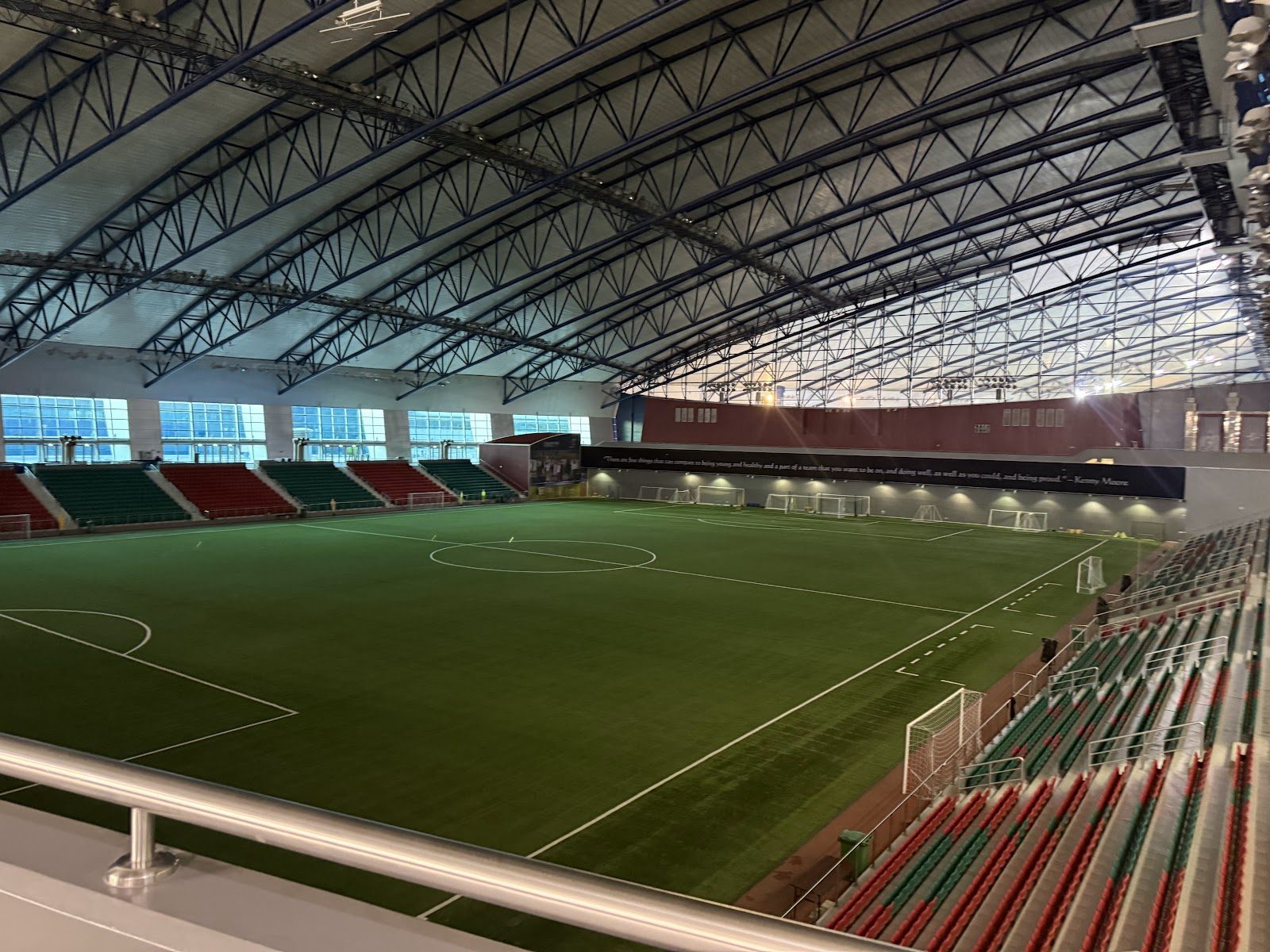
Photo © Arul Kumar via Google Maps
Type
Boarding
Ages
12–18
Curriculum
IGCSE
Ratio
—
The Verdict
Editor's commitment
Right for
Qatar-based athletes aged 12–18 who want boarding in Doha and IGCSE study inside Aspire Zone’s elite sports infrastructure.
Wrong for
Families seeking a conventional all-round school; this 2004 academy exists to develop athletes, not broad extracurricular dabbling or academic theatre.
Watch out for
Aspire highlights 18 graduates in Qatar’s 2022 World Cup squad, but it does not publish aggregate IGCSE results or university destinations.
Ranking breakdown
Aspire Academy · # of 1591
Composite score 55.7. 8 weighted criteria.
By criterion
Academic Outcomes
Weight 20%
#1514
of 1529 scored
University Placement
Weight 16%
#1521
of 1529 scored
Prestige & Heritage
Weight 12%
#1037
of 1571 scored
Alumni Network
Weight 12%
#427
of 1530 scored
Facilities
Weight 12%
#2
of 1534 scored
Transparency & Communications
Weight 8%
#1514
of 1532 scored
Peer & Industry Review
Weight 10%
#66
of 1548 scored
Admissions Selectivity & Demand
Weight 8%
#282
of 1529 scored
Peer & Industry Review
How Aspire Academy is regarded in the sector
80
Strong · medium confidence
Aspire Academy occupies a distinct niche that makes conventional independent-school peer comparison difficult. It is best known internationally as Qatar's flagship sports-science and talent-identification institute, not as a conventional academic prep school, so it rarely appears in mainstream expatriate-school review outlets like WhichSchoolAdvisor or the Good Schools Guide, which focus on IB/British-curriculum day schools in Doha such as Qatar Academy or Doha College. Its reputation instead circulates within sports-education and elite-athlete-development circles, referenced in international press (BBC, Reuters, Sports Illustrated) covering its scouting programs, links to Aspetar sports medicine hospital, and past partnerships with clubs like FC Barcelona and Paris Saint-Germain youth academies. Coverage tends to emphasize athletic pathway outcomes and Qatar's 2022 World Cup talent pipeline rather than university placement statistics typical of academic league tables. Verified commentary from rival Doha school heads or university admissions officers specifically addressing Aspire Academy's academic standing could not be independently confirmed, limiting claims about conventional peer-school or higher-education-sector regard.
Award

Elite Sport 80
World's Top School · The Global Ranking
Aspire Academy is featured on our Global Top 80 ranking at #8. This seal is available for the school's marketing team to use on their website, prospectus and social channels.
- Akram Afif — Professional Footballer, Sports
- Almoez Ali — Professional Footballer, Sports
- Abdelkarim Hassan — Professional Footballer, Sports
Editors' overview
Aspire Academy is not a conventional international school. It is a specialist boarding academy in Doha’s Aspire Zone for young athletes aged 12–18, built around elite sport first and secondary education alongside it. Founded in 2004, it was created to scout and develop athletes in Qatar while providing school education; the academic track named publicly is IGCSE, with teaching in Arabic and English. The institution’s defining strength is concentration: sport, schooling, sports science and national-performance pathways sit in one place. For families chasing an orthodox all-round campus, that narrowness is a limitation. For families with a serious athlete, it is the point.
What puts Aspire on a shortlist is the direct link between youth development and high-performance sport. The academy states that 18 graduate-athletes were included in the Qatar national team squad preparing for the FIFA 2022 World Cup, and it cites Olympic, World Championships and Asian Games medals among athletics graduates. That is hard proof of pathway, not vague aspiration. The setting inside Aspire Zone matters too: this is a school shaped by elite performance culture, not a school that has added strong sports facilities to a standard academic offer. The trade-off is clear. Parents need to accept a model where academic breadth, conventional school life and the usual menu of clubs and electives do not sit at the centre. Aspire’s value lies in single-minded specialisation.
The student who will want Aspire is not the child who merely enjoys sport or wants a strong PE department. Aspire suits a talented, disciplined athlete who can tolerate structure, training load and institutional focus from an early age. It suits families who want boarding, who accept selection pressure, and who value Olympic-grade ambition over broad liberal schooling. It also suits students who want sport without abandoning formal study: the academy points to graduates who moved into medicine, dentistry and engineering, which matters for parents wary of the all-or-nothing gamble of youth sport. In market terms, Aspire occupies a rare niche in the Gulf: a high-performance boarding academy with IGCSE study attached, built for athletes with national or international ceilings rather than for the wider international-school market.
An Elite Sport 80 school
Aspire Academy in Doha is Qatar's central high-performance engine, and its rank of eight on the Elite Sport 80 reflects the extraordinary scale of investment behind it. Aspire operates as a fully integrated academic and athletic institution attached to Aspire Zone, one of the largest single-site sports complexes in the world, and its programme graduates fill the majority of Qatar's senior national squads across football, athletics, squash, gymnastics, table tennis and swimming.
The specialisms are broad but football is the flagship: Aspire's football academy has been the dominant supplier of the Qatari senior men's team for a decade, and its Football Dreams talent-search programme scouted 3.5 million boys across Africa, Asia and the Americas in its first decade, feeding successful signings into European clubs. Athletics (with a full IAAF-standard warm-up track and altitude support), squash, gymnastics, swimming and table tennis all run at national-federation level from the same campus.
Notable alumni include Almoez Ali (record-scoring Qatari striker and 2019 Asian Cup Golden Boot), Akram Afif (2023 AFC Player of the Year and Asian Cup MVP), Boualem Rabia in athletics, and the core of the Qatar squad that won the AFC Asian Cup in both 2019 and 2023 — arguably the single greatest institutional football-development result in the region's history.
International openness is deliberately restricted. Aspire admits Qatari citizens and a small number of designated overseas athletes on federation-level agreements; it is not a school where an overseas family can apply directly through a normal admissions form. There is no fee-paying international boarding stream, no F-1 style visa route, and no scholarship application portal. The practical route for a genuinely elite non-Qatari prospect is via the country's own federations partnering with Aspire. For most expatriate families this is effectively a domestic-only pathway, though Doha itself hosts several excellent international schools for a more standard route.
Academic Performance
Aspire does not publish the data that matter here. We have not seen aggregate IGCSE grades, pass rates, subject-by-subject outcomes, university destinations by cohort, or any benchmarking against other specialist schools in the Gulf. That opacity limits any serious academic assessment. Parents can infer that formal schooling is not decorative: the academy itself points to graduates entering medicine, dentistry and engineering, and that indicates a route to credible post-school study rather than a sport-only holding pattern. But anecdote is not performance data. In a market where strong academic schools disclose top grades, cohort averages and destination lists, Aspire’s silence leaves a material gap.
Relative to peers, Aspire sits outside the usual comparison set. It is not competing head-on with Doha’s broad international schools selling exam breadth, sixth-form options and polished university counselling narratives. Its closest peers are elite sports academies, and by that standard the key academic question is narrower: whether athletes can maintain viable examination outcomes alongside heavy training loads. The school gives no public figures to prove that balance. The result is a two-track judgement: on sporting pathway, the academy has hard evidence of success; on external academic performance, the public record is thin. For families who need published exam strength, that is a clear weakness. For families buying a performance-athlete environment first, it is a trade-off, not a surprise.
Facilities
Aspire’s facilities matter because this institution is built around athlete development, not around the standard international-school checklist. The key assets sit inside the wider Aspire Zone ecosystem: high-level training venues and sports science infrastructure that ordinary schools do not have, or cannot match at anything close to this level. The academy’s own framing is telling. It separates out “Venues” and ties its identity to graduate performance, which points to a campus model where pitches, tracks, conditioning spaces and testing support carry more weight than theatres, makerspaces or glossy common rooms. For a serious athlete, that is a major competitive advantage. For a child seeking a broad school-campus experience, it is a deliberate narrowing.
Against peer schools, Aspire sits in a different lane. Even strong sport schools in the Gulf tend to offer good coaching within a conventional academic campus; Aspire operates closer to a performance institute with schooling attached. That gives it facilities with real sporting purpose rather than decorative ambition. The benchmark to use is not “Does it have a good sports hall?” but “Does it give a talented young athlete daily access to an elite training environment?” On that measure, Aspire is near the top of its niche. The trade-off is obvious. We have not seen public detail on libraries, arts spaces, design labs or the wider non-sport estate, and that silence matters. Parents choosing Aspire are buying specialist excellence, not rounded campus abundance.
In a market where strong academic schools disclose top grades, cohort averages and destination lists, Aspire’s silence leaves a material gap
Prestige
Aspire’s prestige rests on performance credibility, not on old-school cachet. In the Gulf, plenty of schools market ambition; very few can point to a direct pipeline into national-level sport with this degree of force. The academy’s public claim that 18 graduates fed into preparation for football’s biggest stage gives it a status most schools cannot touch. Add medal-winning athletics alumni and the picture is clear: this is a place with real sporting clout. That carries weight with families, federations and ambitious young athletes. It also gives Aspire a rare kind of institutional prestige — not social polish, not inherited brand glow, but hard-earned relevance inside elite sport.
That prestige has limits, and they matter. Outside high-performance athletics, Aspire does not hold the broad reputational pull of a top academic international school. It does not publish the academic outcome data that would elevate it into that conversation, and that keeps its standing narrow but potent. Among serious sport families, that narrowness is no handicap; it is the source of the academy’s appeal. Among parents who prize university placement narratives, debating societies and all-round campus distinction, Aspire carries less shine. The verdict is straightforward: as a specialist athlete-development institution, it is high-status and unusual; as a conventional school brand, it is less commanding.
Outside high-performance athletics, Aspire does not hold the broad reputational pull of a top academic international school
Communications
Aspire communicates in the clipped, institutional register of a performance organisation, not in the warm, chatty style many parents get from mainstream schools. The public face is built around mission, structure and athlete outcomes inside the wider Aspire Zone Foundation, with navigation that points parents toward programmes, venues, management and facts rather than toward the daily life detail families often want first. That tells you something important. This academy expects buy-in to a high-control system. It does not court families with pastoral gloss or lifestyle storytelling. For the right audience, that directness works. Parents of serious athletes want clarity about pathway, standards and who runs the machine. Aspire provides that better than most specialist schools.
Where communication weakens is in the granularity. We have not seen the routine academic disclosures, destination breakdowns, or practical parent-facing detail that would make the offer feel fully transparent beyond sport. The school speaks forcefully about graduate success, including the memorable 18 football graduates tied to World Cup preparation, and that is powerful shorthand for sporting credibility. It says far less in public about how families track progress, how academic concerns are handled, or how boarding life is communicated. That leaves a clear imbalance: strong messaging on elite performance, thinner disclosure on the everyday mechanics parents must trust. Effective for families already sold on the mission; less reassuring for those who need steady, detailed school-home communication.
Uniqueness
Aspire’s uniqueness lies in its hierarchy of priorities. At most schools, sport supports education; here, education supports elite sport. That inversion changes everything: admissions logic, daily rhythm, peer culture and the definition of success. Students live inside a system built to identify, train and advance serious athletes, not to entertain casual enthusiasm or pad out a conventional school résumé. The academy’s public record gives that model teeth. The headline claim that 18 graduate-athletes fed into Qatar’s football World Cup preparation, alongside graduates reaching Olympic and world-level athletics, marks Aspire as a genuine pipeline, not a sports-branded school. In the Gulf market, that is rare territory.
What students gain is clarity. Talented athletes train in an environment where ambition is normal, specialist support is embedded, and peers share the same high-pressure discipline. That can sharpen standards fast. It also gives young people a sharper understanding of professional sport: the work, the scrutiny, the narrow margins, the need for resilience when progress stalls. The non-sport benefit is structure. Students learn to operate under load, manage fatigue and keep formal study alive while performance demands bite. That is hard-edged preparation for adult life, whether they stay in elite sport or move beyond it. The cost is just as clear: this is a single-track institution. Students who want exploratory schooling, broad extracurricular life or room to drift between identities will find the model restrictive.
Aspire Academy is not a conventional international school
Student Profile
The right student for Aspire is an athlete first, student second, and comfortable with that order. This is not the place for a child who wants to dabble in sport, keep several identities in play, or treat training as one strand of a broad school life. It suits a young person with serious competitive intent, a high tolerance for routine, and the discipline to absorb correction without drama. Peer group matters here. Students live among others selected for performance potential, so comparison is constant and standards are hard-edged. That environment can sharpen ambition fast; it can also expose any weakness in motivation, resilience or coachability. The academy’s own record of graduate progression into top-level football and global athletics gives that culture teeth, with 18 former students feeding into one national-team preparation cycle.
Fit also depends on temperament off the field. The students who thrive here can carry fatigue, accept institutional control, and keep academic work moving while sport dominates the timetable. They do not need endless choice, expansive extracurricular menus or a soft, exploratory adolescence. They need focus. Families also need realism. A school built for elite athlete development will not cushion every frustration of selection, injury, form slumps or competitive hierarchy. For the right child, that is forging pressure. For the wrong one, it is an unforgiving fit.
It is a specialist boarding academy in Doha’s Aspire Zone for young athletes aged 12–18, built around elite sport first and secondary education alongside it
Co-curricular strengths
Arts & sport, on a separate axis
Overall 3.6/10
Scored 0-10 from the school's own published evidence. This axis is editorial-only — it does not feed the main WTS ranking.
Drama
2/10
Dance
2/10
Music
2/10
Visual Arts
2/10
Strengths
- +Part of the Qatar government-backed Aspire Zone Foundation, established in 2004 to develop young athletes alongside formal schooling.
- +Access to purpose-built facilities within Aspire Zone, including the Aspire Dome, one of the region's largest indoor multi-sport venues.
- +Alumni include Qatar international footballer Akram Afif, who progressed through the academy's football development pathway.
- +Combines an IGCSE academic curriculum with structured elite coaching in sports such as football, athletics, squash and fencing.
- +Full boarding provision allows sustained, day-to-day integration of training and schooling for identified young athletes.
Considerations
- −Entry is driven primarily by athletic talent identification rather than open academic application, so places for non-athletes are effectively unavailable.
- −Historically a boys-only sporting programme, offering no equivalent boarding pathway for daughters.
- −Public information on IGCSE academic results and fee structures is limited compared with mainstream international boarding schools.
- −The sport-first model means academic breadth and extracurricular variety are narrower than at conventional IGCSE boarding schools.
Gallery
Photo © Hussein Nyaanga via Google Maps
Photo © Santhiya Kandaraja via Google Maps
Photo © أكاديمية أسباير via Google Maps
Photo © Slavko via Google Maps
Photo © Aju George Chris via Google Maps
Photo © Abu Hashim via Google Maps
Photo © Svante Silén via Google Maps
Parent reviews
Have you sent your child here?
Voice reviews carry the strongest trust badge — we transcribe them for you to tidy up before they go live. Prefer to type? A written review is fine too.
Add your voice
In 60 seconds, tell other parents: what's the best thing about Aspire Academy, and what surprised you when your child joined?
We ask for a Google sign-in so every review has a real face behind it — no anonymous drive-by attacks on schools, and no faked positive reviews. Your email is never shown publicly.
Send this profile to a friend
International parents rely on word-of-mouth. Share this review with someone weighing the same decision.
Schools with places
Similar schools to Aspire Academy with places available now.
Doha College
Doha · Qatar
- 2026-27
- WAITPOOLWaitpool / Space-dep.
- 2027-28
- OPENS SOONOpens Sept/Oct '26
Sherborne Qatar
Doha · Qatar
- 2026-27
- PLACES OPENApps open / space-dependent
- 2027-28
- WAITPOOL2027/28 timetable TBC
American School of Doha
Doha · Qatar
- 2026-27
- WAITPOOLSpace-dependent
- 2027-28
- OPENS SOONOpens Sept/Oct '26
Availability first, then country, area, curriculum, price, co-curricular
Consider also
Also worth looking at alongside Aspire Academy.

Long Beach Poly High School
Long Beach, CA · United States
An urban Long Beach public school where the century-old motto 'Scholars and Champions' still fits a campus with more NFL alumni than any other in America.
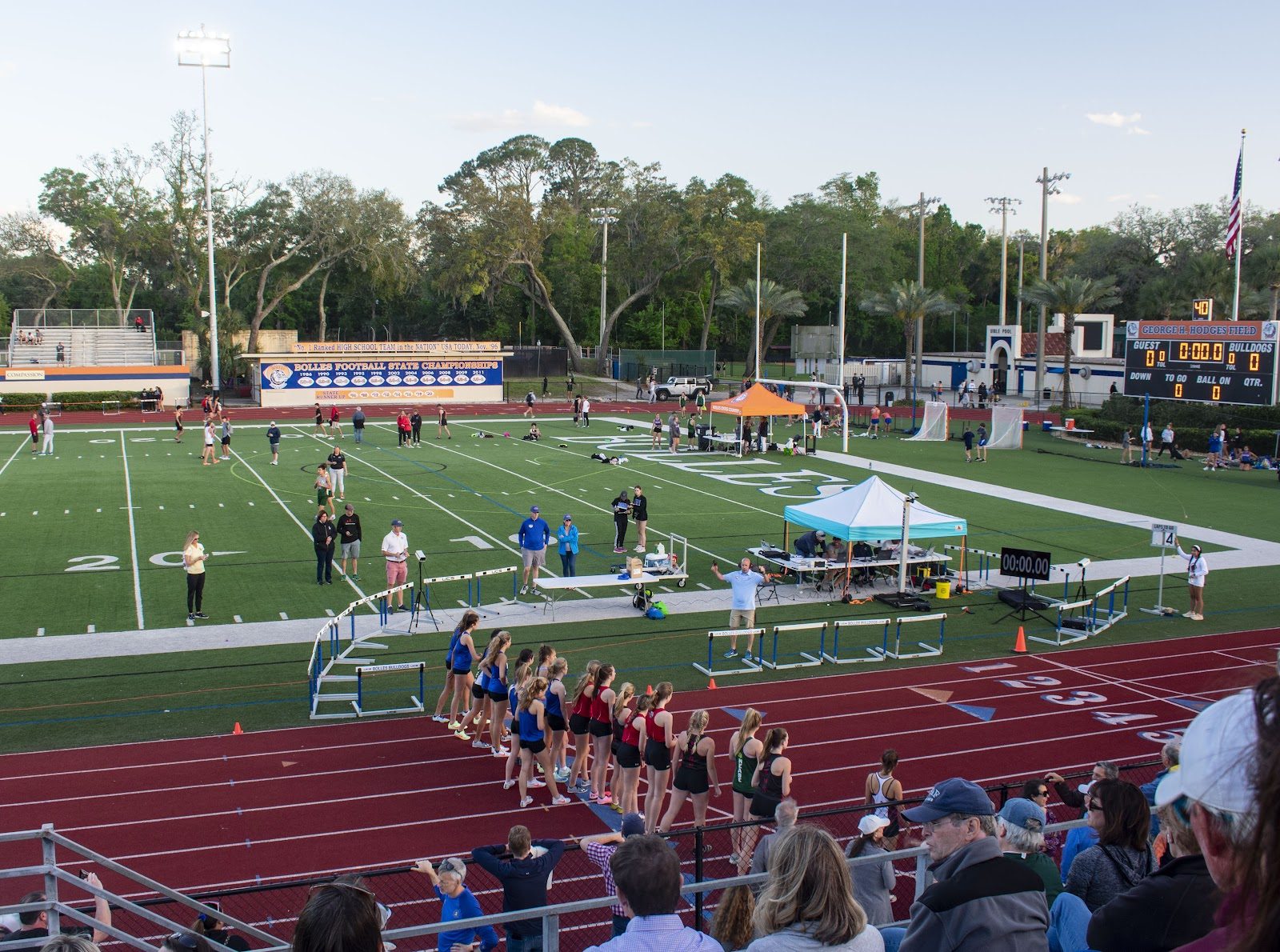
The Bolles School
Jacksonville, FL · United States
On a historic river bluff in Jacksonville, a swimming dynasty that has sent swimmers to Olympic podiums for decades.
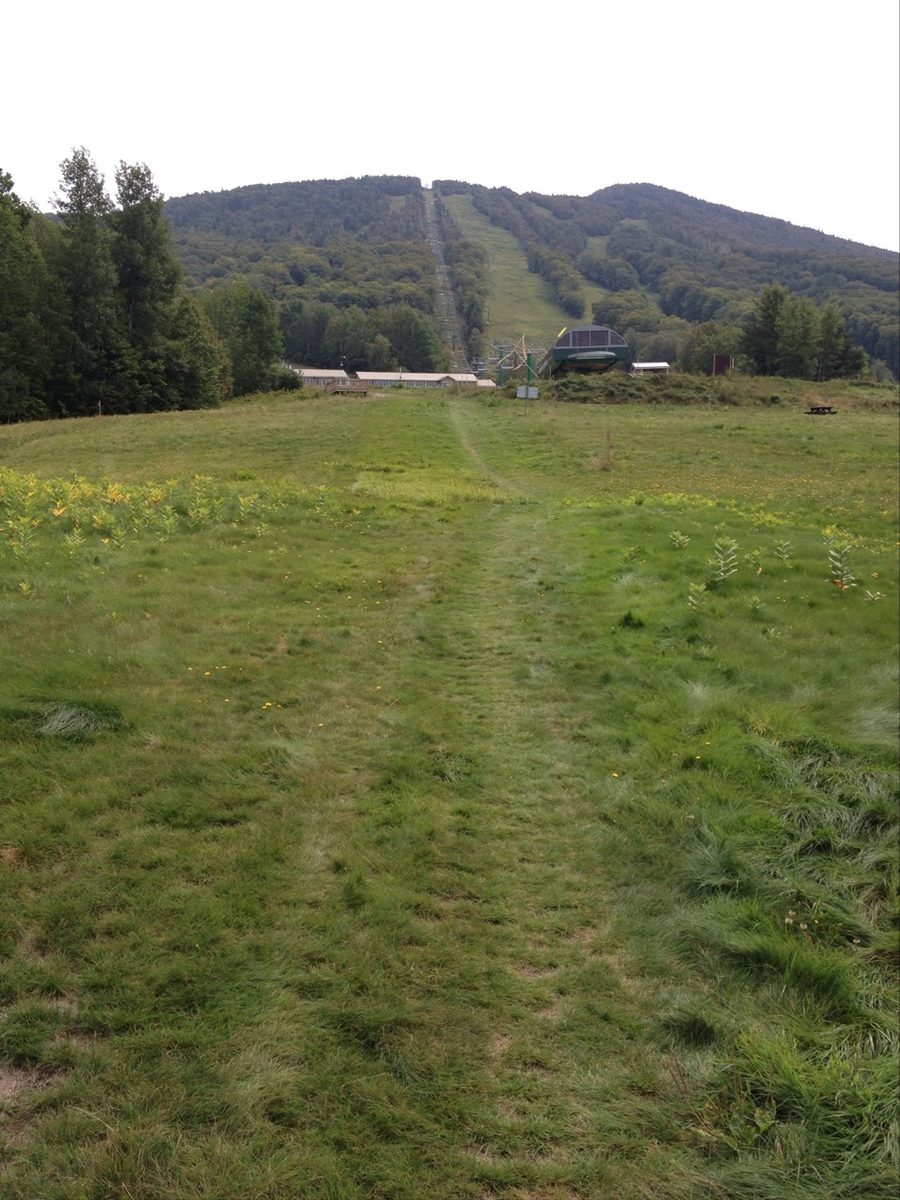
Burke Mountain Academy
East Burke, VT · United States
America's first ski-racing academy, tucked at the base of a Northeast Kingdom peak, has sent dozens of graduates to the Winter Olympics since 1970.

Montverde Academy
Montverde, FL · United States
On a Lake Florence campus in Central Florida, boarders from some 80 countries share dorms with a basketball program that keeps feeding the NBA draft.
Same specialism, country and curriculum — closest matches within ±10 points either way