
North Yorkshire
Ampleforth College
low confidence· 3/6 cats · 2.83 avg sourcesDays shaped by a working Benedictine abbey, saint-named boarding houses, and Britain's oldest purpose-built school theatre.
Type
Both
Ages
11–18
Curriculum
British
Qualifications
A-Level · GCSE
Ratio
—
The Verdict
Editor's commitment
Right for
Families wanting a Catholic 11–18 British school anchored to Ampleforth Abbey, with HMC membership and full boarding at about £51,000.
Wrong for
Pupils who want a secular sixth form, urban life, or lower fees: day places average about £35,000 in rural North Yorkshire.
Watch out for
Ampleforth opened in 1803 on abbey grounds; that Benedictine setting defines school life as much as any classroom or house.
Ranking breakdown
Ampleforth College · # of 1591
Composite score 61.0. 8 weighted criteria.
By criterion
Academic Outcomes
Weight 20%
#855
of 1529 scored
University Placement
Weight 16%
#793
of 1529 scored
Prestige & Heritage
Weight 12%
#289
of 1571 scored
Alumni Network
Weight 12%
#1314
of 1530 scored
Facilities
Weight 12%
#478
of 1534 scored
Transparency & Communications
Weight 8%
#722
of 1532 scored
Peer & Industry Review
Weight 10%
#640
of 1548 scored
Admissions Selectivity & Demand
Weight 8%
#760
of 1529 scored
Peer & Industry Review
How Ampleforth College is regarded in the sector
68
Respected · medium confidence
Among Catholic and HMC boarding peers, Ampleforth is still spoken of as the traditional flagship of English Catholic education, but its standing has been reset by the IICSA findings (2018 and 2020) and the 2020 Ofsted-imposed boarding restrictions, which other heads and Catholic school leaders have publicly treated as a cautionary case in safeguarding governance. Recovery has been noted: subsequent ISI inspections and coverage in the Good Schools Guide and WhichSchoolAdvisor have acknowledged the separation of school governance from the Abbey and strengthened safeguarding structures as genuine, monitored progress rather than PR. University admissions offices do not single the school out, and it does not feature prominently in national Oxbridge or Russell Group league tables, reflecting solid but unremarkable academic outcomes. National press coverage (Times, Telegraph, Guardian) has been dominated by the abuse inquiry rather than academic or co-curricular achievement, meaning its independent education press profile is currently shaped more by institutional reform than by prestige.
- Basil Hume — Cardinal, Religious Leader
- Julian Fellowes — Screenwriter/Director, Downton Abbey
- Rupert Everett — Actor
Editors' overview
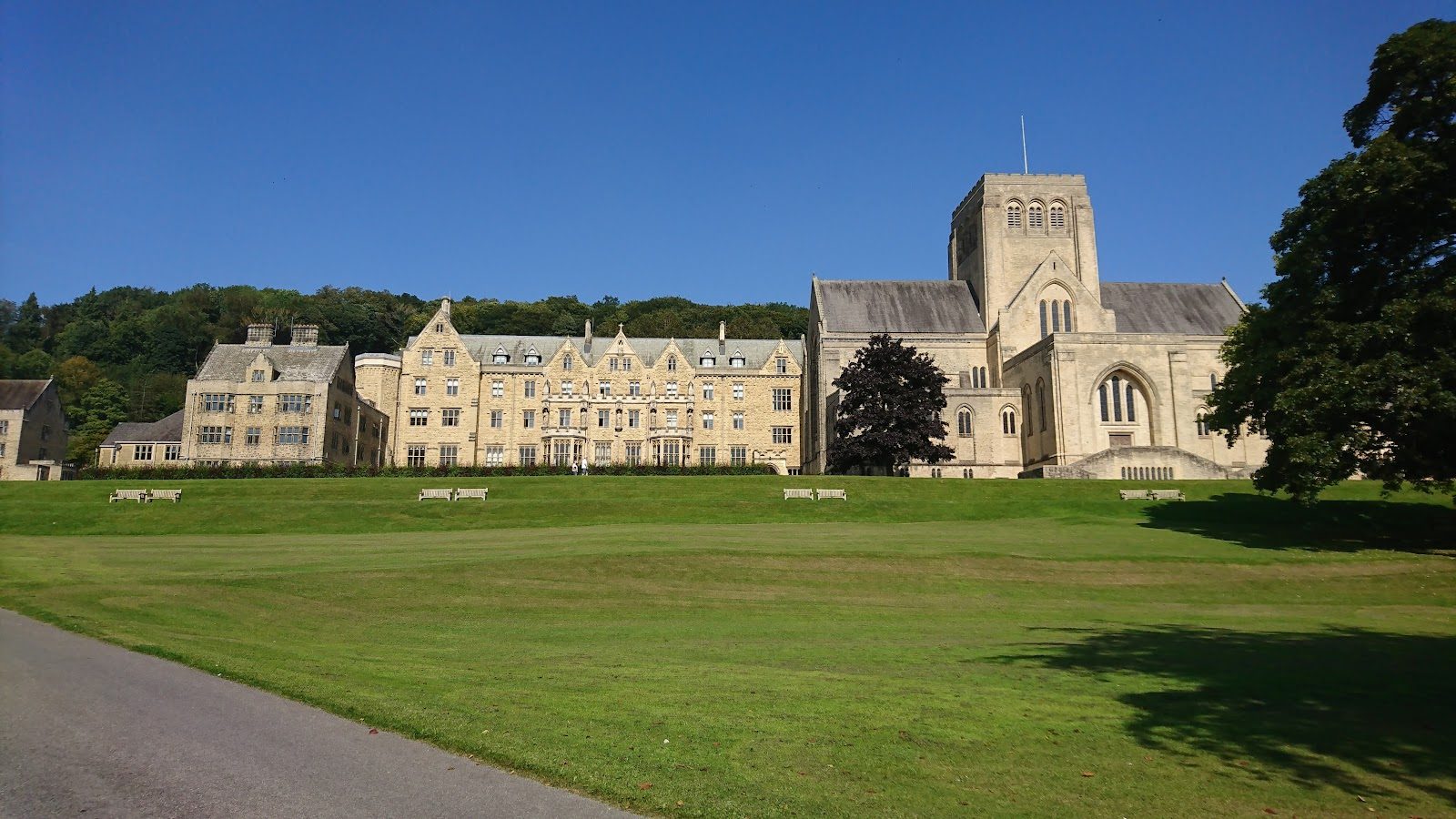
Ampleforth is not a standard country boarding school with a chapel attached. It sits on the grounds of Ampleforth Abbey, a working Benedictine monastery, and that fact shapes the place more than any prospectus language ever could. Founded in 1803, the school carries a Catholic identity that is structural rather than decorative, and parents need to want that. For the right family, that is the draw: a school for ages 11 to 18 where faith, ritual and community life are woven into the daily rhythm, not bolted on. The saint-named houses and the abbey setting give it a strongly self-contained culture that many schools try to imitate and very few can match.
Its market position is clear. This is a full British co-educational boarding and day school, accredited by ISI and HMC, with average annual fees of £51,000 for boarders and £35,000 for day pupils across the full 11–18 ladder. That places it firmly in the upper tier of the UK independent market, but not in the most expensive bracket. What distinguishes Ampleforth is not a fashionable curriculum twist or a metropolitan location near York; it is the depth of atmosphere. Parents looking for glossy international-school polish or urban convenience will find better fits elsewhere. Parents looking for a school with real religious character, old boarding traditions and a setting that gives adolescents room, structure and seriousness will keep it on the shortlist.
The student who thrives here is one who wants immersion rather than optional extras. Ampleforth suits pupils who value belonging to a distinctive community, who can live comfortably within a Catholic framework, and who will respond to a boarding culture with history and formality behind it. It also suits families who want Britain in its older independent-school form, not a diluted version designed for export. Children who need a secular environment, a highly contemporary social tone, or the anonymity of a large urban school will find the place too enclosed. For families drawn to tradition, spiritual life and a boarding school with an identity that is impossible to confuse with any other, Ampleforth has a serious claim on the shortlist.
Academic Performance
Ampleforth does not publish exam data in the material supplied here, and that matters. For a school charging upper-tier fees and competing in a crowded British boarding market, families need hard public evidence on GCSE and A-level outcomes, value added, and university destinations. Without that, academic judgement rests on reputation, structure and cohort profile rather than on clean comparative proof. That is a weaker position than the one held by the strongest independent-school peers, which put headline attainment figures into the public domain and make them easy to scrutinise.
That lack of published detail does not mean weak academics; it means opaque academics. In market terms, Ampleforth sits away from the results-driven sharp end occupied by the most aggressively academic boarding schools. Its draw lies elsewhere, in a more formative and community-bound model of education. Some families will welcome that balance. Others will read the absence of public results as a red flag and move on. The practical conclusion is straightforward: if academic performance is the deciding factor, ask for the last 3 years of GCSE and A-level results, top-grade rates, subject-by-subject breakdowns and destination lists before treating the school as a serious contender.
Facilities
Facilities here are defined first by the abbey estate. That brings scale, seclusion and a sense of inherited infrastructure that many rival boarding schools spend fortunes trying to fake. The standout asset is St Wilfrid’s Theatre, widely cited as the oldest purpose-built school theatre in Britain, and still a serious cultural advantage rather than a quaint relic. For pupils with real interest in drama, performance and production, that is stronger than the token black-box provision found at many peers. The wider setting also matters: this is a campus built for a self-contained boarding life, with the abbey, school buildings and houses forming a single deeply atmospheric environment rather than a loose collection of blocks. Against other traditional country schools, that gives Ampleforth a rarer sense of place than most.
What we do not have in the public domain is the level of crisp, itemised facilities disclosure that top competitors now publish as standard: no clear public inventory of science provision, sports infrastructure, specialist arts spaces or recent capital upgrades. That weakens scrutiny. At this fee level, families should not have to infer whether laboratories, fitness facilities and creative spaces are merely adequate or genuinely first-rate. The estate itself is the obvious strength; the unanswered question is how consistently the practical teaching and sporting facilities match the setting. In peer comparison, Ampleforth wins on character and physical context; it gives away ground on published detail. For some families, the theatre and abbey grounds carry enormous weight. For others, the lack of hard specificity is a problem.
At this fee level, families should not have to infer whether laboratories, fitness facilities and creative spaces are merely adequate or genuinely first-rate
Prestige
Ampleforth carries real prestige, but of a specific kind. This is not the prestige of relentless grade-chasing or London-network social polish. It is the prestige of an old Catholic boarding institution with a deep internal culture, a monastery at its centre and enough confidence not to mimic the market. In British terms, that still counts. Membership of HMC places it inside the established independent-school club, and the fees alone — £51,244 for boarding on average, £34,698 for day pupils — confirm that it trades in the upper reaches of the sector. The saint-named houses, abbey setting and Benedictine inheritance give it a serious, inherited identity that many schools would pay dearly to manufacture and cannot.
That prestige has limits, and they matter. Ampleforth does not hold the crisp, indisputable academic cachet of the country’s most selective boarding names, because public exam transparency is thin. Nor does it offer the worldly sheen of the great metropolitan independents. Its standing rests instead on tradition, faith and atmosphere — powerful assets for families who value them, weaker currency for those who want measurable academic dominance or broad social glamour. That leaves Ampleforth with a prestige profile that is distinctive rather than universal: high-status within the Catholic and traditional boarding world, less commanding outside it. For the right family, that specificity is the attraction, not the drawback.
Ampleforth is not a standard country boarding school with a chapel attached
Communications
Ampleforth’s parent communication carries the strengths and weaknesses of an old, self-contained institution. The strengths are clarity of identity and a strong sense that school life has shape, ritual and internal logic; families do not face the bland, interchangeable messaging common elsewhere. The weakness is transparency. We have not seen the level of granular public disclosure that now marks the best-run schools: no easy-to-scan publication of academic outcomes, no rich public breakdown of facilities, and little sign of the hard, decision-grade detail that busy parents need when weighing a major commitment. At average annual fees of £34,698 for day pupils and £51,244 for boarders, that restraint reads as old-school reserve, not modern confidence.
That does not mean weak communication in the day-to-day sense. A school with this kind of enclosed culture depends on routine, expectations and consistent contact with families, and parents who buy into the ethos will value communication that is firm, coherent and values-led rather than chatty or performative. But effectiveness rests on audience. For loyal families already comfortable with Catholic boarding culture, the message is internally intelligible and strong. For international or first-time independent-school parents, it leaves gaps. The practical verdict is blunt: communication works best once a family is already inside the world; as an external-facing tool for comparison and scrutiny, it is less convincing than it needs to be.
Uniqueness
What sets Ampleforth apart is not old stone, chapel services or boarding ritual on their own. Other British schools have those. Ampleforth has a working monastery at its centre, and that changes the texture of school life. The Benedictine presence gives the place a lived religious framework rather than a ceremonial one: prayer, reflection, discipline and community sit inside the daily routine, not at its edges. For pupils, that brings a kind of education that is more formed than curated. The school does not offer identity as an optional extra. It asks adolescents to live inside a shared moral and spiritual structure, and that produces a more demanding sense of belonging than the loose house loyalty found elsewhere.
The benefit for the right child is substantial. A self-contained campus culture of this kind can give teenagers steadiness, memory and a stronger understanding of responsibility to others. The saint-named houses reinforce that inheritance in ways that feel rooted rather than branded. St Wilfrid’s Theatre adds another layer: not just a good school theatre, but a cultural asset with real historical weight, which gives performance a firmer place in school life than the usual add-on drama offer. The trade-off is plain. This is a highly enclosed world, and some pupils will find that clarifying while others will find it constricting. For families who want a school to provide not just teaching but a whole moral atmosphere, Ampleforth offers something rare for 11–18 education at an average of £51,244 for boarding.
It sits on the grounds of Ampleforth Abbey, a working Benedictine monastery, and that fact shapes the place more than any prospectus language ever could
Student Profile
The pupil who fits Ampleforth is not just comfortable with structure but strengthened by it. This school suits adolescents who want a highly defined community, who can handle shared routines, collective expectations and a public moral framework without constant resistance. The Catholic character matters in practice, not just in branding, so the best fit is a family that wants faith to carry real weight in school life. Boarders who thrive in close-knit house culture and day pupils who still want full immersion will do well. The campus setting also favours students who do not need urban stimulus every afternoon and who gain from space, rhythm and a more self-contained social world.
Socially, Ampleforth will reward pupils with steadiness more than flash. This is not the obvious choice for children who want a loose, secular, highly contemporary atmosphere or the social anonymity that a bigger, more outward-facing school can provide. It suits students who value belonging, accept authority and can live inside a community with memory and rules. Creative pupils, especially those drawn to performance, have a distinctive advantage because the school gives drama stronger cultural standing than many competitors. The fees also place a practical filter on intake: at an average of £34,698 for day pupils and £51,244 for boarders, this is an expensive, tradition-bound environment that will appeal most to families choosing it for ethos first, convenience second.
Founded in 1803, the school carries a Catholic identity that is structural rather than decorative, and parents need to want that
Co-curricular strengths
Arts & sport, on a separate axis
Overall 9.08/10
Scored 0-10 from the school's own published evidence. This axis is editorial-only — it does not feed the main WTS ranking.
Sports
9.5/10
Fields highly competitive rugby, hockey, and cricket squads utilizing an expansive, picturesque North Yorkshire country estate.
Drama
9.2/10
High-quality seasonal theater tracker utilizing the comprehensive venues inside the on-campus theater spaces.
Dance
8.8/10
Offered primarily as a movement asset within theatrical physical training rather than an independent classical track.
Music
9.4/10
Deep, sacred choral tradition anchored by the historic Abbey church, paired with advanced instrumental ensembles.
Visual Arts
8.5/10
Large, dedicated studio networks specializing in ceramics, fine painting, and sculpture, culminating in major public campus exhibitions.
Editor-verified · 8/7/2026
Strengths
- +World-class sports provision, led by a serious rugby tradition (co-curricular sports score 9.5).
- +World-class music, with a strong choral and instrumental tradition (music score 9.4).
- +World-class drama provision (drama score 9.2) alongside elite dance and visual arts.
- +Distinctive Benedictine monastic setting gives a genuinely faith-centred boarding culture.
- +Co-educational British boarding within HMC membership and ISI accreditation offers recognised oversight.
Considerations
- −Catholic identity may feel too confessional for secular families.
- −Rural Ampleforth location means limited city access.
- −Recent safeguarding history documented by IICSA means trust-rebuilding is ongoing.
- −No published examination data was available to us, so academic standing is hard to judge independently.
Availability
Primary entry gate & tests
13+ ISEB / 16+ Exams
Gallery
Parent reviews
Have you sent your child here?
Voice reviews carry the strongest trust badge — we transcribe them for you to tidy up before they go live. Prefer to type? A written review is fine too.
Add your voice
In 60 seconds, tell other parents: what's the best thing about Ampleforth College, and what surprised you when your child joined?
We ask for a Google sign-in so every review has a real face behind it — no anonymous drive-by attacks on schools, and no faked positive reviews. Your email is never shown publicly.
Send this profile to a friend
International parents rely on word-of-mouth. Share this review with someone weighing the same decision.
Schools with places
Similar schools to Ampleforth College with places available now.
Badminton School
Bristol · United Kingdom
- 2026-27
- CLOSEDStandard route closed
- 2027-28
- PLACES OPENCloses Oct/Nov '26
Thomas's Battersea
London · United Kingdom
- 2026-27
- CLOSEDStandard route closed
- 2027-28
- PLACES OPENRegistration open for Sept 2027 and beyond
Christ's Hospital
Horsham · United Kingdom
- 2026-27
- CLOSEDStandard route closed
- 2027-28
- PLACES OPEN2027 entry assessment timetable active
Millfield School
Street · United Kingdom
- 2026-27
- CLOSEDStandard route closed
- 2027-28
- PLACES OPEN11+ / 13+ / 16+ active
Availability first, then country, area, curriculum, price, co-curricular
Consider also
Also worth looking at alongside Ampleforth College.
Downe House School
Cold Ash · United Kingdom
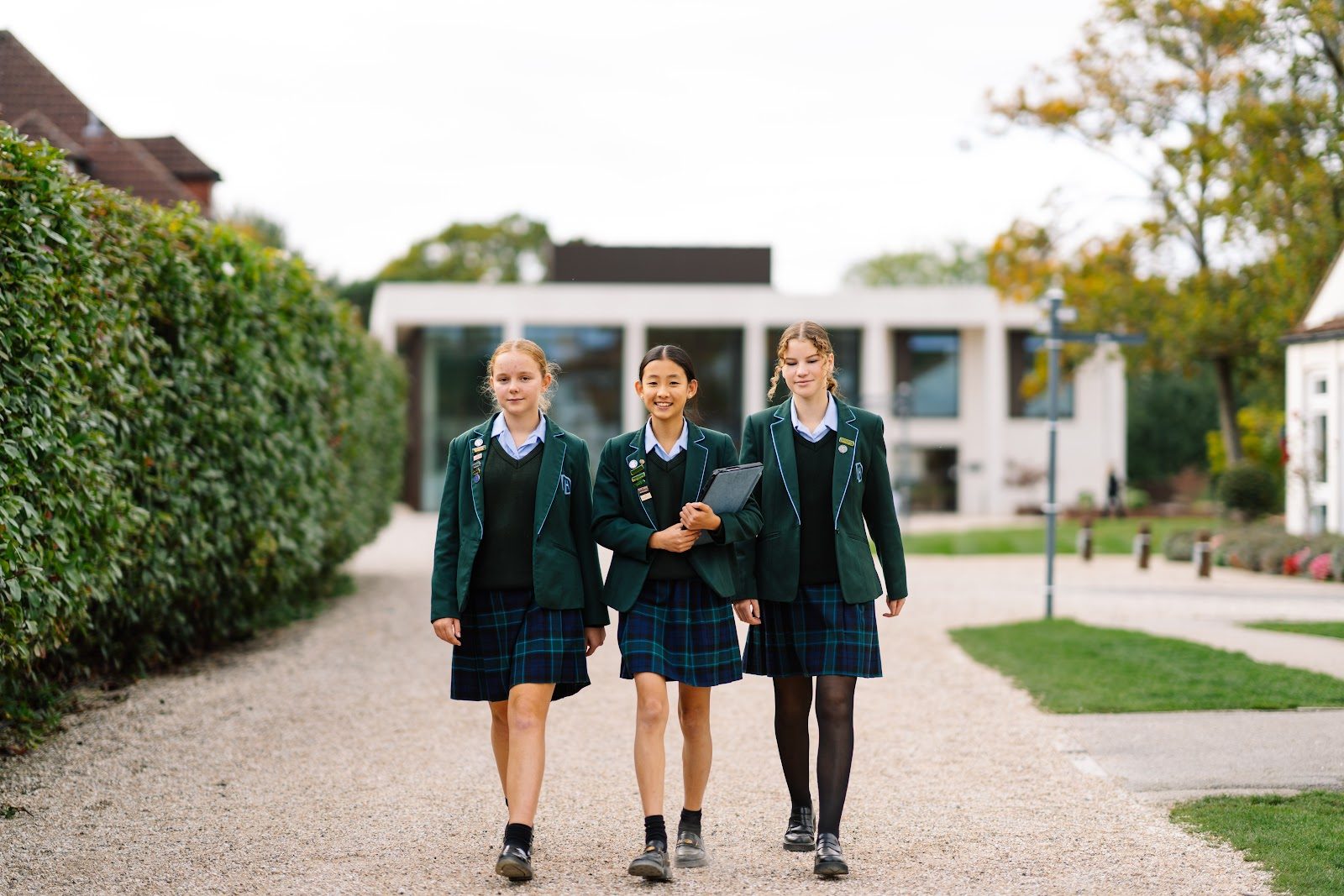
Rooted in Charles Darwin's former home, now a 110-acre Berkshire estate where science thrives and Oxbridge ambition runs deep.
Ibstock Place School
London · United Kingdom
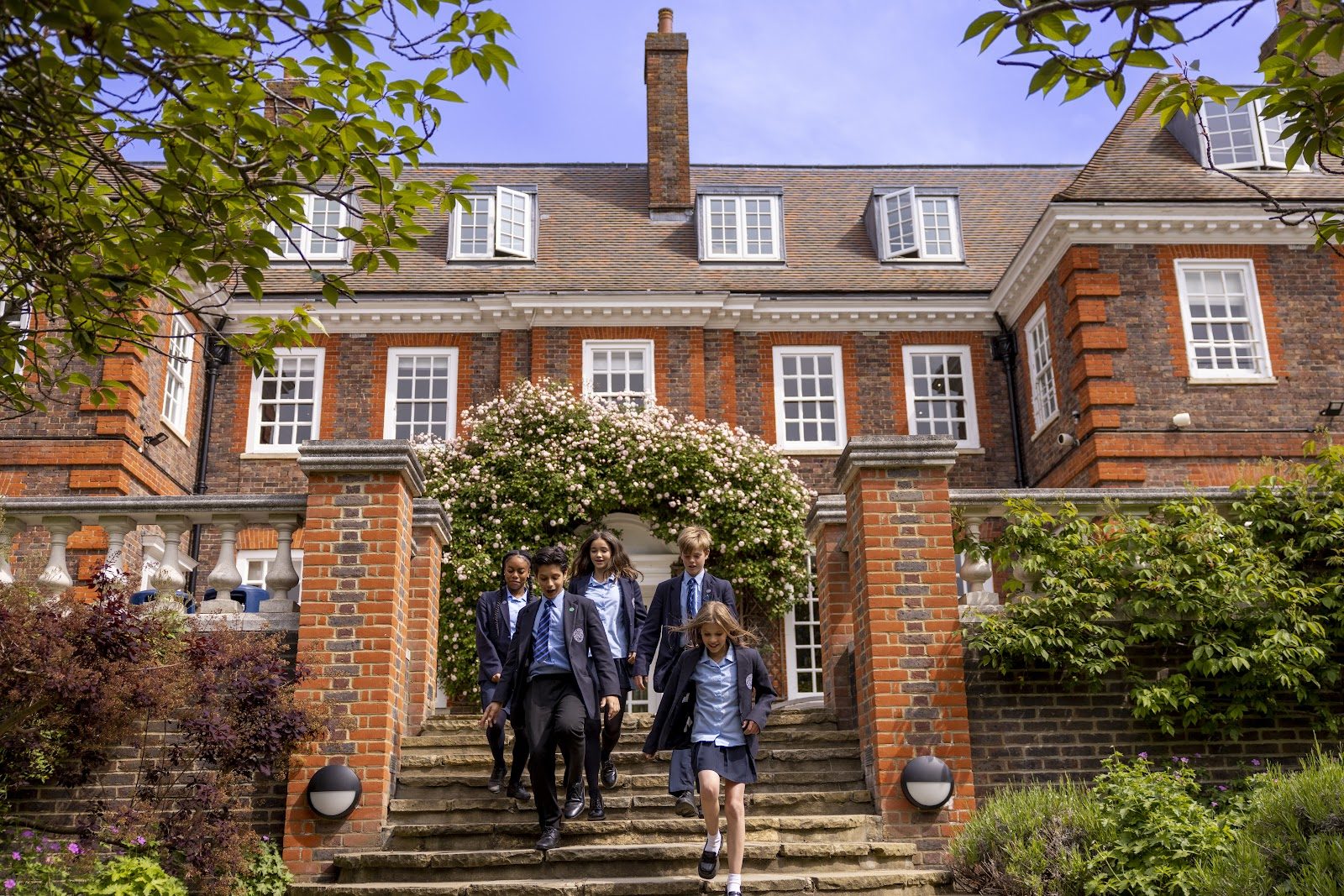
On the fringe of Richmond Park, a Froebel-founded day school has championed co-education since 1894.

Oakham School
Oakham · United Kingdom
Where a 1584 market-town foundation meets Rutland Water sailing, early co-education, and a long-standing IB Diploma alongside A-levels.
Malvern College
Malvern · United Kingdom
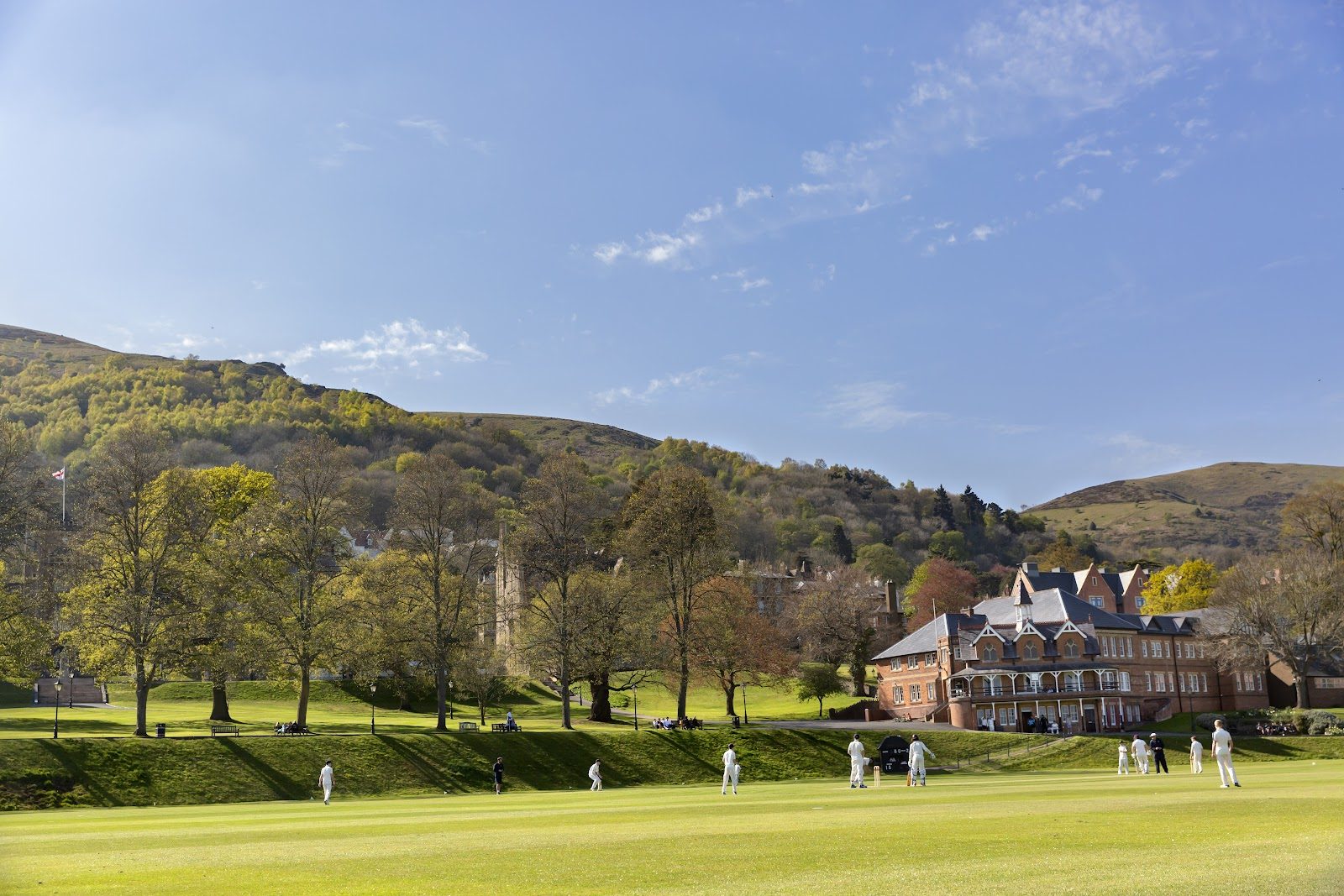
Beneath the Malvern Hills, a campus that once housed wartime radar research has produced four Nobel Prize winners.
Same country and curriculum — closest matches within ±10 points either way