
Île-de-France
American School of Paris
high confidence· 6/6 cats · 3.18 avg sourcesA founding IB school since 1946, this Saint-Cloud campus is the only Paris-area school offering a dual-track IB and AP curriculum.
Know this school? Rate it
No community ratings yet — be the first.
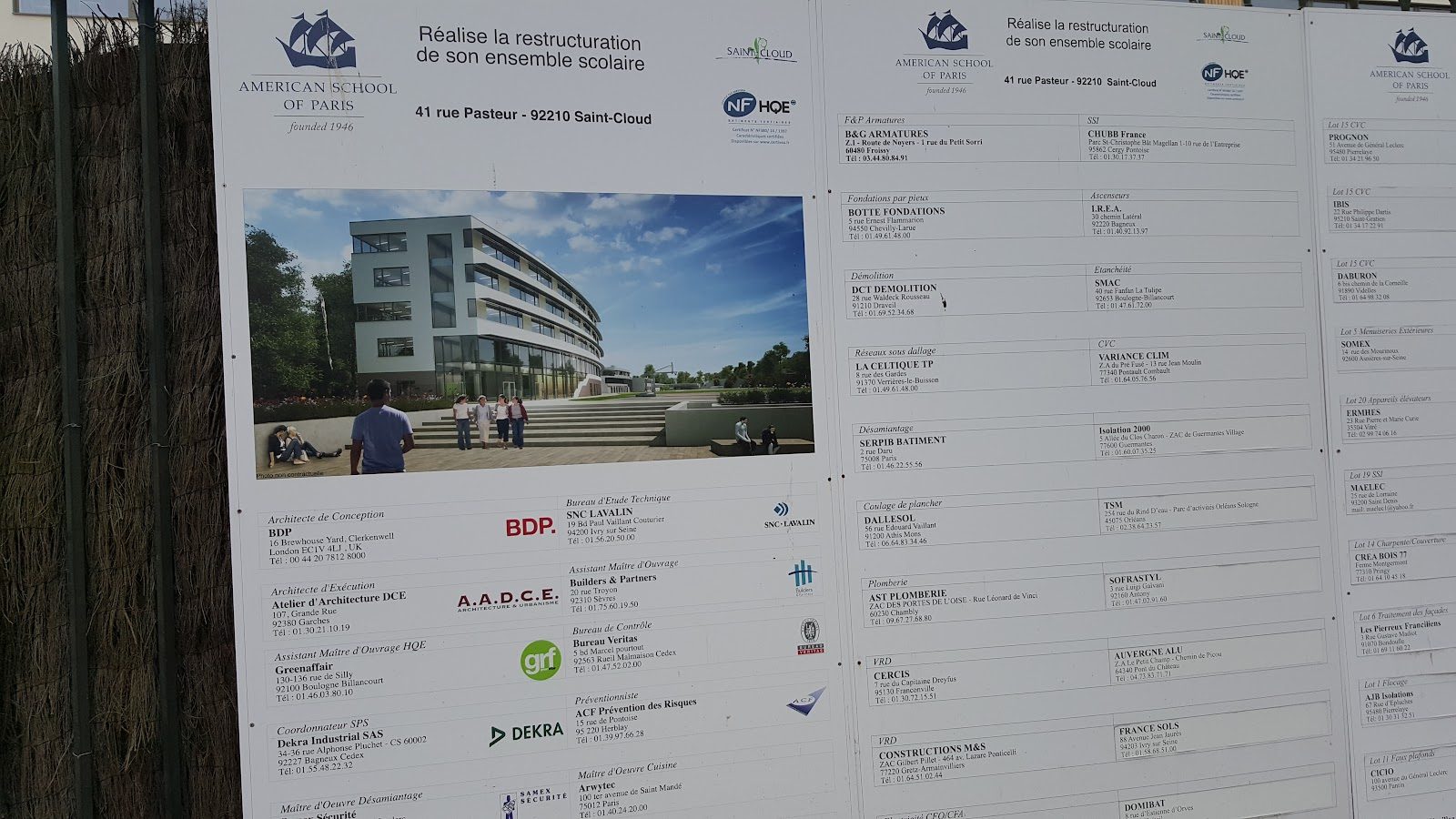
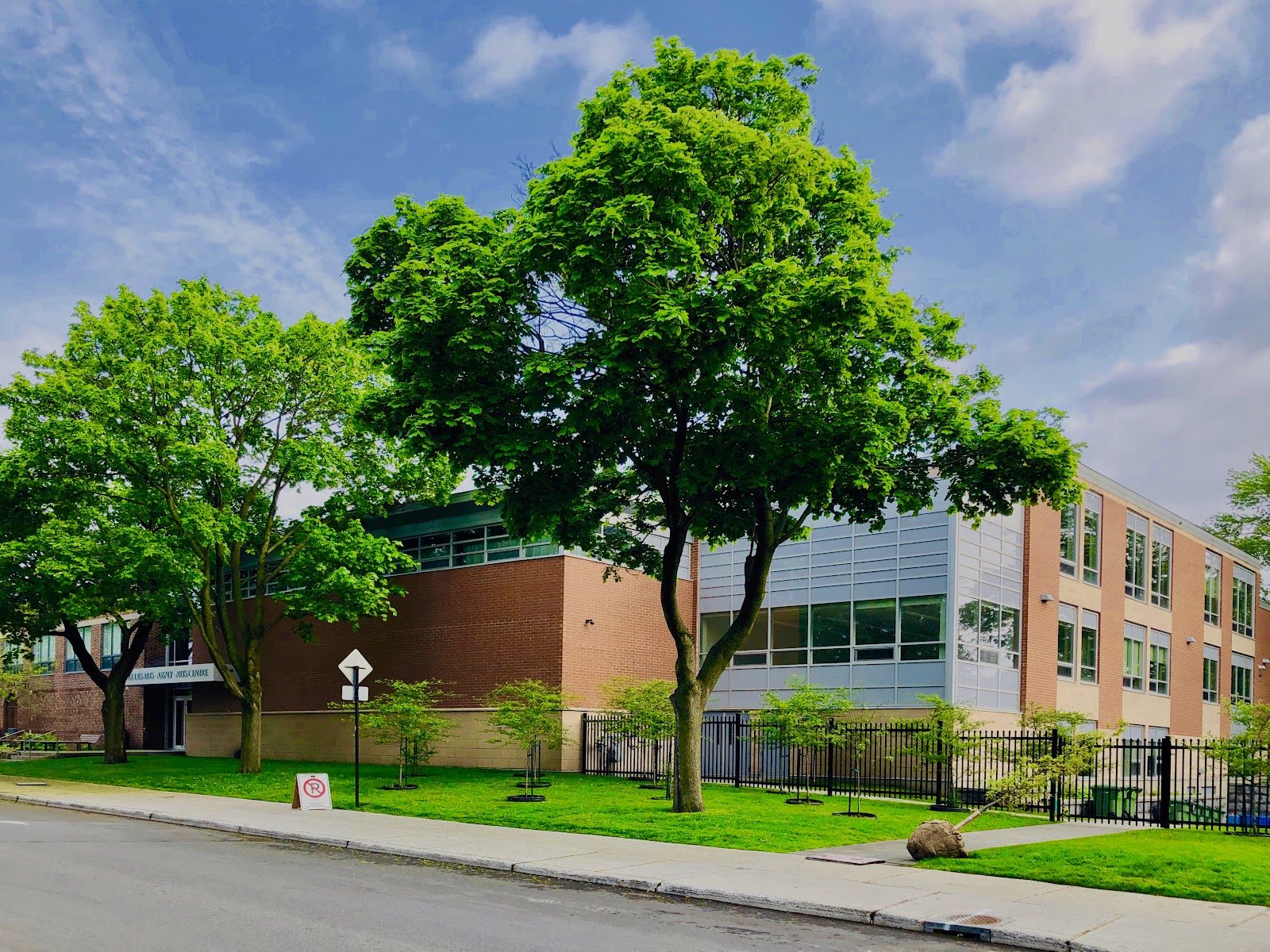
Photo © Jean Vincent via Google Maps
Type
Day
Ages
3–18
Curriculum
American
Qualifications
AP · IB Diploma
Ratio
1:8
The Verdict
Editor's commitment
Right for
International families who want English-medium schooling from ages 3–18, on a Saint-Cloud day campus with both IB and AP.
Wrong for
Families wanting boarding, French-medium teaching, or a cheaper Paris option: ASP is non-religious, day-only, and averages €35,241 a year.
Watch out for
MSA, CIS and IB credentials give reassurance, but the school does not publish aggregate IB or AP results in the public domain.
Ranking breakdown
American School of Paris · #359 of 1591
Composite score 72.5. 8 weighted criteria.
By criterion
Academic Outcomes
Weight 20%
#513
of 1545 scored
University Placement
Weight 16%
#355
of 1529 scored
Prestige & Heritage
Weight 12%
#283
of 1590 scored
Alumni Network
Weight 12%
#590
of 1532 scored
Facilities
Weight 12%
#61
of 1564 scored
Transparency & Communications
Weight 8%
#61
of 1575 scored
Peer & Industry Review
Weight 10%
#313
of 1582 scored
Admissions Selectivity & Demand
Weight 8%
#1231
of 1530 scored
Score history
American School of Paris · 2026
Movement across 2024–2026. Peer average overlaid.
Overall — 2024–2026
72.5/ 100
▲ +13.2 vs 2025
year on year
Peer & Industry Review
How American School of Paris is regarded in the sector
78
Strong · medium confidence
The American School of Paris is consistently referenced in expat education guides and 'best international schools in Paris' rankings (e.g., ExpatExchange, Goodschoolsguide-style expat forums, and Forbes/CNBC style relocation coverage) as one of the top American curriculum options in France, alongside institutions like the International School of Paris. It has a long-established reputation among diplomatic and corporate expat communities in the Paris region, with strong IB/AP outcomes cited in third-party relocation and education press, though it lacks the broader 'unanimous top-tier' recognition seen in outlets like Tatler for UK-style institutions.
Evidence sources
Editors' overview
The distinguishing fact here is simple: American School of Paris is the only Paris-area school offering both the IB Diploma and Advanced Placement on one campus. That dual-track sixth-form offer matters. Families who want an American-style school without giving up the IB have a genuine choice here that most rivals do not match. The school is in Saint-Cloud, runs from ages 3 to 18, teaches in English, and has been operating since 1946, which gives it unusual institutional depth in a city where many international options are younger, smaller or tied to a single national system. Its accreditations — MSA, CIS and IB World School status — place it firmly in the established international-school bracket, not the start-up end of the market.
ASP’s other clear advantage is physical scale. The school states that it sits on more than 12 acres and calls itself the largest international school campus in the Paris region. That matters in practice: space for sport, arts and movement is hard to find around Paris, and cramped urban sites are a real weakness at many city schools. ASP also sells continuity well to globally mobile families. An American curriculum, English-medium teaching, AP courses, college preparatory classes and the IB Diploma create a highly portable academic profile for children who may move again before graduation. The school charges an average annual day fee of €35,241, which places it in the premium tier, but not at the outer edge of European international-school pricing.
The parental shortlist case is strongest for expatriate families who want a serious academic school with American DNA, international university routes and a community large enough to absorb new arrivals quickly. It is also strong for students who do not fit neatly into one post-16 pathway and want to keep options open between US-style applications and the IB. The school’s own language leans heavily on a holistic, family-oriented culture; the more concrete point is that ASP has had decades to build the pastoral and administrative machinery that mobile families need. With 3–18 provision on one site and 1946 behind it, it offers continuity as much as curriculum.
This is not the right fit for every child. Students who want a small, intimate school with one clear national system may find ASP too broad in remit and too international in composition. Families seeking a French-language education or deep integration into the French national system should look elsewhere. The students who thrive here are internationally minded, academically ambitious, and comfortable in a school that is unapologetically expatriate in character. For that group, ASP earns shortlist status because it offers something concrete and scarce in Paris: scale, longevity, and a genuinely flexible senior-school programme on a single campus.
Academic Performance
ASP’s academic proposition is stronger than many Paris competitors because it gives older students more than one externally examined route. That flexibility matters, but flexibility is not the same as transparency. The school promotes the IB Diploma, Advanced Placement and college-preparatory pathways, yet it does not publish headline aggregate outcomes in the public domain: no school-wide IB average, no IB pass rate, no AP score profile, and no year-on-year destination data with enough detail to benchmark performance properly. For an established school charging premium fees, that is a real weakness. Parents can infer ambition from the programme mix; they cannot verify academic yield with the precision available at more data-forward rivals.
That does not push ASP into a weak bracket. It places the school in the credible but opaque category on results. The dual-track senior offer gives students genuine optionality and widens university access, which matters for internationally mobile families and for applicants weighing North American and global admissions systems at once. In peer terms, that breadth is distinctive in the Paris market. In accountability terms, ASP still falls short of the best-reporting schools, which publish hard numbers and let families judge value without guesswork. The verdict is clear: this is a school with a serious academic structure, but not one that backs its claims with enough public exam data.
Facilities
Facilities are a core strength here. The school sits on more than 12 acres, a rare luxury in the Paris market, where many international schools work around tight urban footprints and make compromises on sport, rehearsal, circulation and outdoor time. Scale matters day to day: it allows a school to run more things at once without every timetable turning into a logistics exercise. ASP also trades on purpose-built facilities rather than improvised conversions, which places it ahead of many city-centre rivals operating in adapted office blocks or constrained historic buildings. For parents comparing campuses in and around Paris, this is one of the few schools where physical plant forms part of the educational case, not just the admissions photography.
The limitation is that the school talks more about size than inventory. It directs families to a virtual tour and references student transportation and campus resources, but it does not publish the kind of room-by-room facilities detail that stronger operators now provide as standard. That leaves an information gap around specialist science provision, performing arts spaces, indoor sports capacity and early-years design. Even with that caveat, the broad verdict holds: this is a campus with real operational muscle and more breathing room than most local peers. In a dense metropolitan market, that is a serious competitive advantage — and one of the clearest practical reasons to visit.
The distinguishing fact here is simple: American School of Paris is the only Paris-area school offering both the IB Diploma and Advanced Placement on one campus
Prestige
Prestige here rests on three things: endurance, market position and recognisable outputs. This school sits in the top rank of Paris-area international education because it has served expatriate families for generations, covers the full school journey on one site, and offers a sixth-form structure that few local competitors can match. That gives it real institutional weight. Among mobile international families, the name carries serious recognition; among universities, the combination of IB, AP and college-preparatory routes is legible and practical. The fee level — an average of €35,241 a year — also places it firmly in the premium bracket, which does not create prestige on its own but does signal the segment in which the school competes.
That said, prestige here is stronger in reputation than in publicly testable academic evidence. The school benefits from longevity, scale and visibility, and its alumni footprint has at least 6 notable names catalogued in Wikidata, which gives it a credible public afterlife. Yet the school does not publish the hard outcome data that would move it from respected to indisputable. No aggregate IB or AP figures means parents must buy into the brand without the level of proof that the best-run schools now provide as standard. The verdict: ASP has established prestige, built on history, breadth and standing in the expatriate market, but it stops short of the data-backed elite because public accountability is thinner than the price and profile warrant.
In peer terms, that breadth is distinctive in the Paris market
Communications
Parent communication looks organised, high-frequency and heavily channelled through the school’s digital infrastructure. The navigation alone tells you a lot: there is a parent portal given top-billing across the site, admissions and community information are easy to find, and the school does not bury practical next steps behind vague branding language. For a school serving mobile international families, that matters. Parents need timetables, forms, contacts, transport details and routine updates to be easy to locate, not hidden inside a maze of inspirational copy. ASP clears that bar. The school also puts real effort into audience segmentation: current families, prospective families, donors and holiday-programme users each have distinct routes through the site, which is a mark of administrative competence rather than marketing flair.
The weakness is depth, not structure. The public-facing communication is polished, but still tightly managed. It says plenty about ethos, community and broad opportunity, and less about the operational detail parents watch closely once enrolled: response standards, leadership access, escalation routes, safeguarding clarity, timetable transparency or how bad news is handled. That does not make communication weak; it makes it selective. The presence of a dedicated parent portal is a strong sign, and a school of this scale cannot function without robust routine messaging. But the external picture remains more curated than candid. Parents who value plain dealing will want to test that directly in conversation, not just on screen.
Uniqueness
What sets ASP apart is not a vague international gloss but a rare structural advantage: students do not have to choose between an American-style school and a globally recognised diploma route until the senior years force that decision. In the Paris market, that matters. Families with children heading towards different university systems get real optionality on one campus, without an early lock-in to a single national template. The school also serves a constituency many schools struggle to handle well: globally mobile families who need educational continuity without constant reinvention. ASP’s scale, long institutional memory and breadth of pathways give it a practical resilience that smaller, narrower schools cannot match.
That distinctiveness brings tangible gains for students. A child can enter young, stay through graduation, and move through a school built for transitions rather than one sharp academic mould. For older pupils, the presence of several routes side by side widens subject planning, keeps university choices open and reduces the pressure to commit too early to one examination identity. The campus footprint also changes the daily experience: there is room for movement, activity and a school day that does not feel compressed by city constraints. Add the school’s age range of 3–18 and average annual fee of €35,241, and the picture is clear. This is a high-cost, high-option school whose uniqueness lies in breadth with continuity — a strong proposition for expatriate families, less so for those who want a tighter, more single-system education.
Families who want an American-style school without giving up the IB have a genuine choice here that most rivals do not match
Student Profile
The best fit is the internationally mobile child who is comfortable in a community where arrivals and departures are part of the normal rhythm of school life. This is not a place built around one national parent body or one fixed university destination. It suits students who need portability, who can handle a cohort with mixed educational histories, and who benefit from a school that can absorb newcomers without treating them as exceptions. Children who thrive here tend to be outward-facing, adaptable and academically purposeful rather than parochial or dependent on a tight local social scene. With ages running from 3–18, the school also suits families who want one institution to carry siblings across very different stages without repeated re-entry into the Paris market.
Socially, the strongest fit is for pupils who like range: different backgrounds, different ambitions, different post-school routes. The school’s own emphasis on community and personal development points to a student body that values more than exam mechanics, but this does not read as a soft environment. It reads as a high-functioning expatriate school with enough scale to support multiple kinds of learner. Students who want a small-bubble intimacy, a strongly French educational identity, or a narrow, single-track academic culture will find the fit weaker. The pupils who do best here are those who want serious options without a premature lock-in, and who are confident enough to make use of them.
Its accreditations — MSA, CIS and IB World School status — place it firmly in the established international-school bracket, not the start-up end of the market
Co-curricular strengths
Arts & sport, on a separate axis
Overall 8.78/10
Scored 0-10 from the school's own published evidence. This axis is editorial-only — it does not feed the main WTS ranking.
Sports
9/10
Soccer and basketball as extracurriculars.
Drama
9/10
Theater productions, which confirms drama provision.
Dance
7.5/10
Music
9.2/10
Both jazz band and choir, showing more than a bare mention through named ensembles.
Visual Arts
9.2/10
Visual arts as an extracurricular.
Editor-verified · 7/30/2026
Notable alumni · Wikidata
6notable alumni
0 historic (born pre-1930) · 4 modern (born post-1970)wikidata:2026-07-28 How we source this
Strengths
- +Founded in 1946 as one of the first international schools in Europe, giving it long institutional continuity in the Paris expat community.
- +Upper School students can choose between the IB Diploma and AP courses, a dual-track flexibility rare among Paris-area international schools.
- +Instruction is in English throughout the ages 3–18 range, suiting internationally mobile families moving between school systems.
- +12-acre campus in Saint-Cloud, which the school states is the largest international school campus in the Paris region.
- +MSA, CIS and IB World School accreditation provide external validation across both American and international frameworks.
Considerations
- −Tuition runs from roughly EUR 25,000 to over EUR 41,000 depending on grade, placing it among the costliest schools in the Paris region.
- −The school does not publish whole-cohort exam averages or destination data in the public domain, so outcomes are hard to judge externally.
- −Campus sits in Saint-Cloud, outside central Paris, meaning many families rely on the school's private bus network rather than walking or short transit.
- −Additional annual charges may apply for English as an Additional Language or learning support if a child is assessed as needing them.
Availability
Primary entry gate & tests
Academic Record
Gallery
Photo © Jean Vincent via Google Maps
Photo © Antoine Conin via Google Maps
Parent reviews
Have you sent your child here?
Voice reviews carry the strongest trust badge — we transcribe them for you to tidy up before they go live. Prefer to type? A written review is fine too.
Add your voice
In 60 seconds, tell other parents: what's the best thing about American School of Paris, and what surprised you when your child joined?
We ask for a Google sign-in so every review has a real face behind it — no anonymous drive-by attacks on schools, and no faked positive reviews. Your email is never shown publicly.
Send this profile to a friend
International parents rely on word-of-mouth. Share this review with someone weighing the same decision.
Explore further
Schools families also compare with American School of Paris
Schools with places
Similar schools to American School of Paris with places available now.
École Saint-Louis de Gonzague
Paris · France
- 2026-27
- CLOSEDStandard route
- 2027-28
- OPENS SOONOpens Oct/Nov '26
École Jeannine Manuel
Paris · France
- 2026-27
- CLOSEDStandard route
- 2027-28
- OPENS SOONOpens Oct '26
International School of Paris
Paris · France
- 2026-27
- WAITPOOLSpace-dependent
- 2027-28
- PLACES OPENRolling
École Alsacienne
Paris · France
- 2026-27
- CLOSEDStandard route
- 2027-28
- OPENS SOONOpens Sept/Oct '26
Availability first, then country, area, curriculum, price, co-curricular
Consider also
Also worth looking at alongside American School of Paris.
École Jeannine Manuel
Paris · France
Founded by a Resistance veteran, this Left Bank lycee teaches core subjects bilingually and has topped France's rankings for a decade.
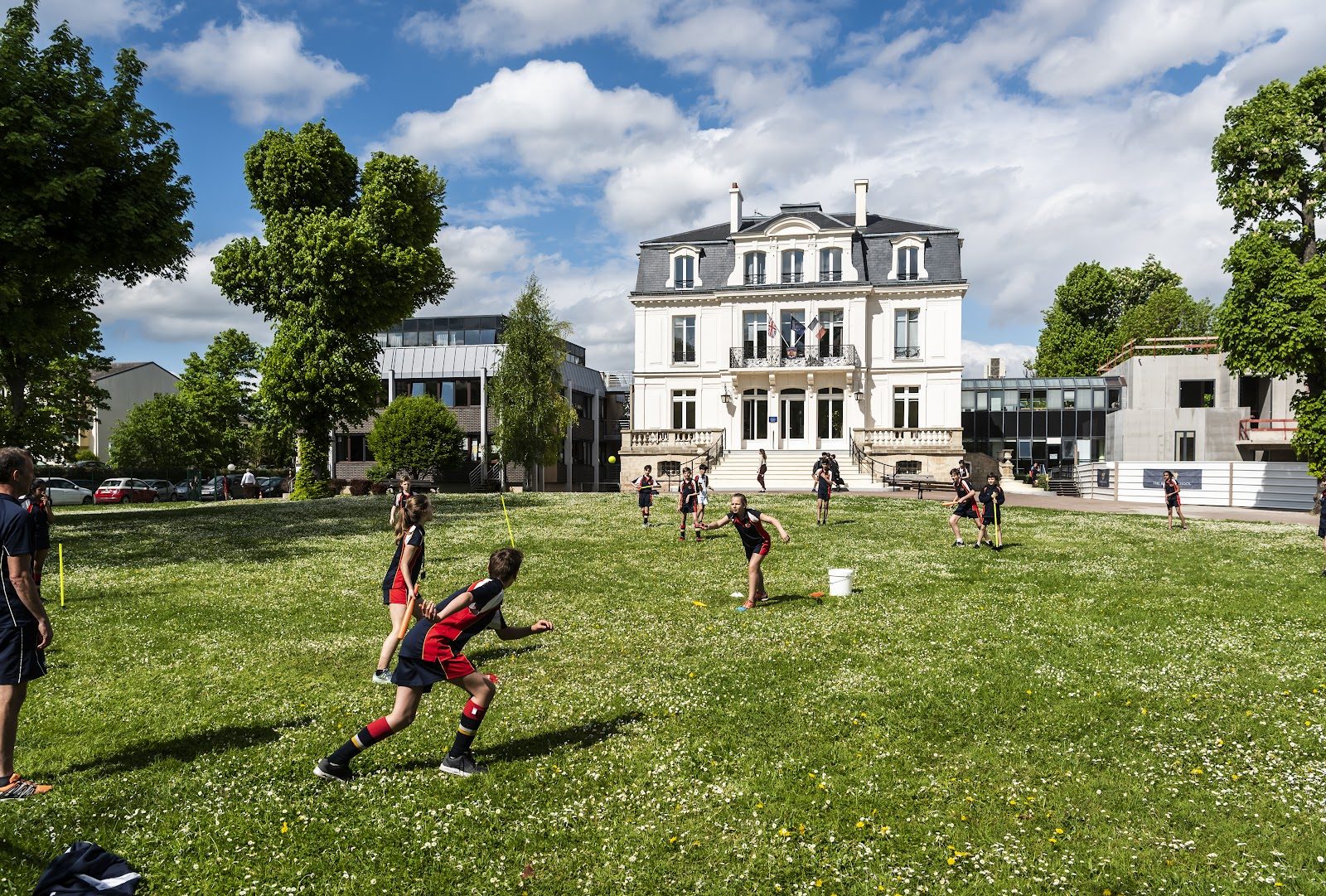
The British School of Paris
Paris · France
The only UK-government-accredited British School Overseas in France, pairing A-Levels and IB on the Seine west of Paris
The Haverford School
Haverford · United States
Since 1884 on Philadelphia's storied Main Line, an all-boys campus balances rigorous academics with athletics and the arts.
Lower Canada College
Montreal · Canada
Rooted in an 1861 boarding-school lineage, the only English-language Quebec school running both IB Middle Years and Diploma Programmes side by side
Same country and curriculum — closest matches within ±10 points either way